Showing posts with label 1001 Books. Show all posts

Sunday, April 10, 2011

The Return of the Soldier, Rebecca West

I've been busy of late, and away with family, here's a post from a book I read last month!  I'm back to normal now, here's to more posting!

The Return of the Soldier was an unexpected book, a moving story about the tragedy of war and lost love.  Another author I'd never read, but who is just so amazing that I've already ordered more of her work.  Rebecca West is a great find, and given she's a major feminist literary figure, again, I'm kinda embarrassed that this is my first encounter with her!

The Return of the Soldier is one of her first novels, published in 1918, it is a beautifully told story of a "shell shocked" man, who develops amnesia, thinking that he is only 20, and in love with a woman other than his wife.  Our narrator is There is some shocking classism in this book, at first I was a tad jaw dropped over it, but as the book goes on, quickly realised that this was an essential part of its message.  The woman Chris thinks he is love with is now a middle-aged married woman who is barely middle class (apparently) and the scathing descriptions of the narrator were pretty grating at first.

This book is really about love, responsiblity, and the horror of war.  The importance of class in the novel is smoothly explored, from the jarring descriptions at the start, to the narrator (Chris' cousin, Jenny) coming to side with Margaret (the long lost love).  This is a beautifully written novella that was an unexpected joy, highly recommended!

8.5/10

This was an eread on Kindle for iPad.

Tuesday, March 22, 2011

The Bell Jar, Sylvia Plath

The Bell Jar, Sylvia Plath's only novel, is a famous exploration of mental illness and recovery, made more famous by the author's suidice only weeks after its first publication in 1963.  It is a thinly disguised autobiography, from an earlier period of Plath's life during which she had a breakdown.

This is a compelling book, the disintegration of Esther Greenwood is beautifully rendered in Plath's prose as she moves further and further into depression and "madness,"  and eventually, into recovery.

The Bell Jar is a feminist landmark, Plath's reflections on work, marriage, motherhood, and a creative life, issues that Plath herself never resolved in her own life and work:
"And I knew that in spite of all the roses and kisses and restaurant dinners a man showered on a woman before he married her, what he secretly wanted when the wedding service ended was for her to flatten out underneath his feet like Mrs. Willard's kitchen mat.  [....]  So I began to think maybe it was true that when you were married and had children it was like being brainwashed, and afterward you went about numb as a slave in some private, totalitarian state."
The Bell jar is a testament of illness (and recovery), though the recovery part is cast into shadow by Plath's own suicide.  I just couldn't get past my "real life" knowledge about her as a person, especially at the end of the book, and knowing the novel is basically autobiographical.  

The Bell Jar is a coming of age story, and a finely drawn portait of its time, the crushing expectations of women, and of creative expectations of the self.  It's a poetic and tragic read.  Books like this take it out of you, but are worth it.  I'm not really a poetry person, but have added Plath's work to my to be read pile.  It's just ultimately tragic that she felt so desolate that she took her own life. 

8.5/10

An e-read on Kindle for iPad.

Sunday, March 20, 2011

Candide, Voltaire

In more shameful confessions, I've also never read any Voltaire.  This was a short and sweet beginning.  I liked the melodrama and pathos of Candide.  It was wryly humourous and had a fantastic sarcasm and lightness to it that I honestly wasn't expecting.

Candide is a striking novella, written in 1759, about the improbable adventures of a young man, accustomed to luxury, thrown into a variety of unpleasant situations and crises.  Characters die, come back to life, reunite, and philosophise about their situations endlessly.  It's a sarcastic piece, ridiculing the philosophy of optimism in particular:
"Yes," said Candide, "and I have seen worse that all that; and yet a learned man, who had the misfortune to be hanged, taught me that everything was marvelously well, and that these evils you are speaking of were only so many shades in a beautiful picture."
I pretty much liked it, it's a tad heavy in some parts, but I think my perception of this was more due to when it was written, it's hard for a novel written in the 1700s to not be tad ploddy in parts to a modern eye.  Overall, the humour and wit is worth it. 

On the army:
"...a million of regimented assassins traverse Europe from one end to the other, to get their bread by regular depredation and murder, because it is the most gentlemenlike profession."
 On poets and their reputation:
"Ignorant readers are apt to judge a writer by his reputation.  For my part, I read only to please myself.  I like nothing but what makes for my purpose."  Candide, who had been brought up with a notion of never making use of his own judgment, was astonished at what he heard...."
It's an improbable book, with a moral ending.  Worth a read.

7/10

This was a free ebook on Kindle for iPad.  The translation was lovely. 

Friday, March 18, 2011

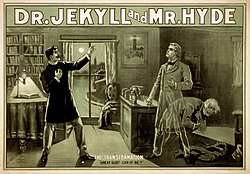
The Strange Case of Dr. Jekyll and Mr Hyde, Robert Louis Stevenson

It's frankly embarrassing that I have never read this novella.

This book suffers from modernity (or is that postmodernity, I can never decide).  That is, I have been so massively exposed to far worse and more terrible, violent, and horrific tales just in getting out of bed of a morning, that the novella just failed to thrill me.  Reading it was more of a chore than a pleasure.  I just didn't feel it.  I think there are scarier things on Nick Jr.  Culturally, we've moved on.  I also think we've embraced our darker sides more openly than in the era this was written, so someone being self obsessed, interested in (presumably) sexuality and experience is not the jaw dropping horror it may have been in yesteryear.  I know, I exaggerate, but still, popular culture has moved on. 

I get that the novella is a lesson in suppressing the self, and the strength of - okay, I can't resist - the Dark Side.  But overall, I prefer the Star Wars "there's always hope for you in the end, even if you're a homicidal Sith Lord and killed a whole bunch o' people and cut of your son's hand and stuff" brand of lesson, than the "I guess it just went bad, whoops, there you go don't go and do bad stuff, peeps," brand of Dr Jekyll.

Is this review frivolous?  Perhaps.  I blame that potion I drank earlier...

I found the lack of insight of Jekyll/Hyde simply frustrating.  This was something he decided to do to himself.  He kept at it out of some moral passivity that was annoying, killed someone, felt bad, tried a bit harder, but ultimately seemed to blame the fact he ran out of some kind of salt for his complete reversion to his 'evil' self.  Some finer moral reflections on these actions might have been nice.  And the message that, if indulged, our "baser" instincts lead straight to some kind of evil takeover is a tad simplistic and naive for my liking.

One to read, though, definitely.  It's important in the very shaping of the stories we now take for granted, and I'm very aware that I'm reading this work from a particular cultural and social position.  For that reason, it gets -

7/10

Another Kindle for iPad e-read, this one was free, there are heaps of free and 99 cent versions of the classics out there!

Wednesday, March 16, 2011

Elective Affinities, Johann Wolfgang von Goethe

Embarrassingly, I'd never read any Goethe, so decided to start with Elective Affinities, as it's short and sweet.  Elective Affinities is Goethe's third novel, and also one of three of Goethe's books on the 1001 list.

Elective Affinities is Goethe's attempt to explore human relationships, and marriage in particular, using the laws of chemistry as a...muse?, inspiration?, recipe book?, well, something of that sort.  Published in 1809, it was quite controversial at the time (and since) for what many perceived as immorality and the encouragement of divorce, though apparently many critics (and me!) can't actually decide if Goethe came down in the end on the side of the "sanctity" of marriage, or the pragmatism of divorce - at least, the destiny of true love.

The main characters, Eduard and Charlotte, have married late in life after their first partners have died.  They (for some reason) decide to ask Eduard's friend, the Captain, and Charlotte's neice and ward, Ottilie, to come and live with them, with predictable (apparently, this being the point) results.  Bonds are broken, new bonds are formed, apparently there is nothing to be done (or is there?).  This is, apparently, a double displacement reaction in chemistry.  Sounds thrilling, yes?  Perhaps not.

I'm not sure if Goethe was sure what moral lesson he was going for here, if any, but it seemed to me that the book was a tale of the inevitability of fate, coupled with the efforts of individuals to change it (or not).

 I can't resist quoting the blurb from a critical work on the book:
"From the time of its publication to today, Goethe's famous novel The Elective Affinities (Die Wahlverwandtschaften, 1809), has aroused a storm of critical confusion. Critics in every age have vehemently disagreed about its content (whether it defends the institution of marriage, radically supports its dissolution, or even whether it is about marriage at all), its style (whether it is romantic, realistic, modern, or postmodern) and its tone (whether it is tragic, anti-romantic, or ironic).
"[....]  Readers fiercely debate the role of the chemical theory of elective affinities presented in the novel. Some argue that it suggest a philosophy of nature that is rooted in fate. Others maintain that it is about free choice. Others believe that the chemical theory is merely a structural device that allows the author to foreshadow events in the novel and bears no relevance to the greater issues of the novel."
So, no great suprise that the novel is somewhat confusing and not easy to interpret.  Personally, I felt it was more about the effect of free choice impeding the "natural order" of things, the elective affinity between those who are "meant to be." When the characters refuse to follow the dictates of chemistry, a whole heap of bad stuff happens to them.  So the lesson seems to be: get in line with fate or get out of the way.  Except a tad more poetic and lyrical and stuff.

Okay, I didn't love it.  I found myself actually saying aloud as reading it, "this book is just odd!"  I just couldn't get into it, didn't find it convincing, and didn't get anything much out of it.
I understand that Goethe is telling us something about relationships, now with more chemistry [TM!], but the characters weren't compelling, the relationships seemed one-dimensional and unbelievable.  I didn't love that one of the main love interests was the neice of Charlotte, that Eduard had known as a small child, and was dependent on them, and still at school (!!).  I was [spoiler alert] also just jaw-dropped at the sudden killing off of Charlotte's child!  That, and the utter selfishness of the four main characters just made it an unpalatable read for me.

I have to admit, though, that I've since been interested in reading about interpretations of the book, (probably because I wasn't too certain of my own).  I was also fascinated to read that Max Weber took his concept of Elective Affinites in The Protestant Ethic and the Spirit of Capitalism, from Goethe's book!  I've always had a soft spot for Weber.

So, read it, it's interesting, and you'll find yourself thinking about it afterwards.  But not a fabulous one to just read.

6.5/10

This was an e-read on Kindle for iPad, though make sure you get the Oxford World's Classics edition, this is a good translation by David Constantine (I hate to think what a bad translation would do to this book!).  It was only a few dollars from Amazon, and the only decent translation in e-book form I could see there.

Ref: Goethe's Elective Affinities and the Critics, Astrida Orle Tantillo (2001), see here for a full reference and extracts.

Sunday, March 13, 2011

What Maisie Knew, Henry James

I found myself reading What Maisie Knew because it's a book about shared custody.  I'm a stepmother to two kids who have been in shared care (one is now majority with us) for nearly 8 years.   I was interested to read a take on custody from the point of view of the child, as well as the historical differences, as Maisie was published in 1897.  Not to mention that I'm a bit of a Henry James fan.

 Here's where I confess that I like Henry James. But OMG, is he wordy.  This one suffered from a severe lack of full stops.  I know, I know, that's one of his "things", but still, I found The Ambassadors and Wings of the Dove far easier reads than Maisie, so it seemed particularly bad here.


What Maisie Knew follows the story of Maisie's life as she is landed in shared care between two equally crappy parents, and her subsequent relationships with her step-parents and governess.  As Maisie grows from a child of around 6 into a teenager, so does what she "knows."  This growth is the real point of the novel.  I also thought it was a powerful comment on the casual cruelties of parenting.


"She was divided in two and the portions tossed impartially to the disputants.
[...]
"What was clear to any spectator was that the only link binding her to either parent was this lamentable fact of her being a ready vessel for bitterness, a deep little porcelain cup in which biting acids could be mixed.  They had wanted her not for any good they could do her, but for the harm they could, with her unconscious aid, do each other."
At times this book just brilliant, the development of and insight into the central character (and what she "knew") from child to teenager is remarkable.  Some of the insights into divorce and it's uglier effects on children were painfully true.  The constraint that Maisie has, and feels, especially in the early parts of the book, as she is constantly silent and observing, was beautifully captured. [That sentence was positively Jamesian in it's many clauses!]  
"She puzzled out with imperfect signs, but with a prodigious spirit, that she had been a centre of hatred and a messenger of insult, and that everything was bad because she had been employed to make it so.
"Her parted lips locked themselves with the determination to be employed no longer.  She would forget everything, she would repeat nothing, and when, as a tribute to the successful application of her system, she began to be called a little idiot, she tasted a pleasure new and keen."
At other times this book was just too long, too involved, and too essentially unbelievable.  The whole step-parents romance and successive runnings off was just too overly dramatic for me.  It was where my interest flagged.  I felt the sections to do with her parents were far more relevant and alive.  I just noticed that all the sections I highlighted were from the first 50% of the book, nothing afterwards, and this is just where the action moves from her parents to the step-parent/parent/confusing romances and meetings and running away a lot last half of the book.

Overall, the book felt like an over-developed novella.  I also didn't find Maisie a terribly sympathetic character, she was a tad lacklustre, and I would have liked some more anger and grief from her.  More like the passage I quoted above, and less of the "dragged along in the whirlwind" feel she had for much of the book.  I also thought the central character of Mrs Wix was one dimensional, and her "love" of Sir Claude was an unnecessary distraction the book could do without.  The Countess as a figure of horror, largely because, as far as I can tell, she's black, sat pretty uncomfortably for me.

The long conversations and sometimes minute details weighed heavily in the final section, though the tension of this lack of decision was finely done, I was mostly just glad it finished.  The ending was unsatifying, and too many practical questions were left unanswered (like, what did they live on!).

All in all, while I'm a fan of Henry James, this one fell a tad short for me.  It was too convoluted and felt like it wasn't edited closely enough, for my liking.  I'd consider myself pretty fluent in 'James'', but had to re-read several sections, they were so confusing.  Some parts of this book sing, but some fall flat.

Read it if you're interested in custody of children after divorce, or if you're a James fan.  Probably skip it otherwise.

6.5/10

There are four Henry James novels on the core list: The Ambassadors, The Wings of the Dove, Portrait of a Lady, and What Maisie Knew.  This was a e-read, on Kindle for iPad.  5BBR2AG3E7XG

Saturday, March 12, 2011

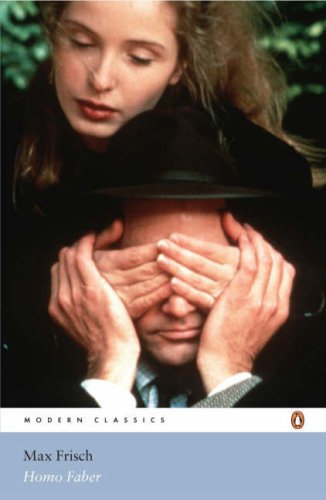
Homo Faber, Max Frisch

Wow, just wow.  You know, finding this kind of book is exactly why I wanted to do this 1001 thing in the first place.  I can't really imagine how I would have stumbled across Max Frisch otherwise, and I am just so glad I did!

Homo Faber [Man the Maker] is a book about the realities of life, against a backdrop of plotted unreality: plane crashes, incestuous affairs [echoes of Oedipus Rex are loud and clear here], jungle explorations and other oddness.  In the face of coincidences that it is unnecessary to believe in, Frisch tells his story of ordinary mystification in the face of life.  The title character gradually disgards his practical masculinities in the face of mortality, his own and that of others.  His life unravels, as he wanders back and forth in the face of meaninglessness and death.  The scale of his errors and tragedy is simply the stage for the small and very human reflections of a human being confronting their own mortality and meaning.

The convolutions of plot are the disintegration of his carefully constructed reality, the collapse of his rationalist/technologist world view. You don't have to believe them, they are waystations in the journey Frisch takes you on.  

It was published in 1957, so there's some wincing in the face of the roles/opinions of women of the time, but surprisingly little, I think because Frisch treats the central female characters as full human actors.  There were some gems of reflection in here about gender relations and construction:
The man hears only himself, according to Hanna, therefore the life of a woman who wants to be understood by a man must inevitably be ruined.  According to Hanna.  The man sees himself as master of the world and the woman only as his mirror.  The master is not compelled to learn the language of the oppressed; the woman is compelled, though it does her no good, to learn the language of the master, she merely learns a language that always puts her in the wrong.  Hanna regretted having become a Ph.D.  As long as God is a man, not a couple, the life of a woman, according to Hanna, is bound to remain as it is now, namely wretched, with woman as the proletarian of Creation, however smartly dressed.
Which is essentialist, sure, but nevertheless, awesome!

This book has wit, beautiful prose, and a real visceral feel to it.  It's modern, despite being nearly 60 years old.  It is haunting, and will definitely stay with me.  

On finishing this I bought two more of Frisch's books, I had to order hard copies as they aren't on Kindle, so I'm looking forward to their arrival!

This was an e-read on Kindle for iPad.

9/10

Sunday, March 6, 2011

Cranford, Elizabeth Gaskell

Okay, turns out this was a re-read!  I had a suspicion that some of these might turn up: if I wasn't 100% sure I'd read a book on the 1001 list already, I left it marked as unread.  I was fairly sure I'd read Cranford, I'm an Elizabeth Gaskell fan, and wasn't sure how I could have missed it, but couldn't remember anything at all about it!

This definitely shouldn't be taken as a negative about the book, which is a fine one, perhaps more of a memory trick I played on myself, or that year I may have read a lot of Gaskell, or something.   Pays to write books down...I guess!

Cranford is a finely drawn portrait of small town life, or a slice of that life, in particular of the women of a certain class.  It's told from the point of view of an 'insider' visitor who participates in the story, a loosely disguised version of Gaskell herself.

Gaskell is a keen and wry observer of human interaction, and captures the lives of these women so beautifully, sensitively, but with a perfect sense of amusement about it all that made me smile through the whole work.  In parts it is painfully sad, the lives of these women are so limited, and in some cases, tragic.  Gaskell perfectly captures this contained life, while showing that the inner lives and kindnesses of this tightly woven community are expanded, despite the constraints of their circumstances.

As a history of women, it's a powerful one.  I had a sense of horror that this was all I could have expected from that world and that time, this limited and constrained existence, set about by rules of action that are so different from what women of my own "class" get to expect today.  Of course, we have just as many social rules now, but then, it was so small, geographically and socially, women were unable to be strong social actors, to act to change their circumstances, other than within the boundaries set (like marriage, the actions of relatives, or the kindnesses of friends).  Forbidden so much, to both rise or fall, they were trapped like bugs in amber.

Gaskell's writing perfectly matches this constraint, her wry observations, and clear sympathies and admirations, this is a powerful read, disguised as a small story about some women of the middle class who live in the small village of Cranford.  Well worth a read (or a re-read, as the case may be!).

The discussion of Cranford at Gaskell Blog is well worth a read, it adds much to the story.

8.5/10

Wednesday, March 2, 2011

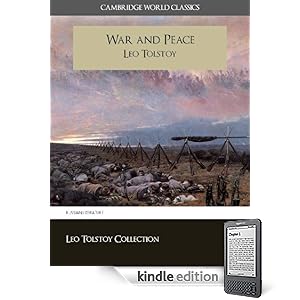
War and Peace - Read Along Check In #4

I have found War and Peace a challenge.  I understand it's awesomeness, and appreciate Tolstoy's purpose, but simply find it long, tedious, full of diversions in which I'm not interested, and containing far too much of the War.

In fairness, some parts of this book were inspired, and I enjoyed some of the more philosophical reflecitons on the nature of war, death, and love interspersed throughout.  I liked some of the social reflections, the parties and intrigue.  The characters grew and expanded, I particularly liked Nicholai/Nicholas Rostov here, and also Mary/Marya, and their relationship.  Pierre remained a frustrating favourite, I kinda wanted him to just snap out of it.  It sucked that Helene died with little or no exploration, that was obviously a plot device, clumsy.

There were patches I actively didn't like: the wolf hunting scene (that was a WTF moment); the overall portrayal of women, they never quite reached the real world image that was true of some of the male characters, even the central women stayed as stereotypic, seeming to lack that final acceptance of women as actual human actors required to make them fully real; the long descriptions of politics and tactics littered throughout - in trying to be an accurate history, Tolstoy parted ways with having a good story.

What do I think of the book.  Long.  Wordy.  Detailed.  Slow.  Mixed with moments of beauty, grand ideas, and close characterisation (for blokes).  Overall, I didn't like it, but the book itself as a reading experience will stay with me for a long time.  I'm glad I read it, and I'm also glad it's over.

Thank you, Allie, at A Literary Odyssey, for hosting this as a readalong, I never would have finished it otherwise!!

Saturday, January 22, 2011

War and Peace - Read Along Check In #1

Well, I'm through the first volume, a little late due to being distracted, and having no ereader during the floods here!

War and Peace, what does one say?  I'm liking it better than I thought, but not as much as I'd prefer, given how much of the damn thing there is left!  I hit some serious battle scenes, which I've always found tedious no matter the book, and War and Peace is no exception, what a suprise given it's title.  It's not even battle, some of it, just never ending warfare intel and politics.  Didn't love it.

The court scenes in the first part of the book, I liked some of this, there were elements of that glimpse into other times that I love in classic literature, some of the characters were interesting enough, I like the aloof Andrei/Andrew Bolkonsky, he seems to have a smirk of cynicism that I appreciate, and his fervent sister was well, if stereotypically, drawn.  The letter she writes in Book one is like an extended eyeroll of heated religiousity and "obedience" - nice!

Pierre is the character most people seem to like best, but he just seems a little dull and easily led thus far, I'm not burning to find out what happens next to him.  I also found the introduction of one of the main love interests, Natalya/Natasha, when she is 13 to be more than a little off-putting.  I know!  Let's set up our personification of feminine awesomeness as a young girl, a child really, then she'll be super easy for all the grown men around her to love and worship, and lust after!  That's not problematic at all!!  /sarcasm.  Again, didn't love it.

Book 1 is like the world's longest introduction, it could do with some serious editing.  Is that bad...I suppose one isn't supposed to say such things about Tolstoy.  I was also not as up with my French, or my Russian turn-of-the-century-in-jokes as Tolstoy seems to expect, so often felt like the odd one out at a rather formal and lengthy dinner party put on by people who speak a lot of French for a country getting invaded by France.

As a rampaging feminist, I'm struggling a little with the "men = active, women = stay home and die in childbirth whilst obeying their elders and keeping demure" dichotomy, [not to mention the 13 year old girls are super awesome, you should really fall for one right now!!] but hey, that's par for the course with classic literature (and all too much modern lit too, sad to say).  Overall, I did like the machinations of some of the society "ladies," especially Anna Mikhaylovna, Boris' mother, who will stop at nothing to advance him in society.  I liked her drive and effortless use of her few remaining cards to put one over the many Princes in the story, manipulate everyone, and get her own way.  My less favourite characters are the "typical ladies" or romantic interests, they are a little tedious and obvious - but hey, I'm optimistic given I've got so far left to read, maybe it'll turn around.

Overall, it's getting there, but I'm more than a bit tempted to take a break and read something else!  It's not an easy book to pick up in between demands from my small child, either, so I am a little behind with it generally.  Must pick up the pace to keep up with the other read-a-longers!


The edition I'm reading:


1001 Book Challenge, being a joiner

Pub Writes is hosting a 1001 challenge this year where you can commit to as few as 5 books off the list, or as many as 16+  So I signed up for it.  It's great to read the other linked blogs as well.  Hop on over if you feel like joining me!

Tuesday, January 18, 2011

#1 Atonement, Ian McEwan


My first 1001 book!  I treated myself to a copy of Atonement on Kindle for iPad, but with the flood, had some power issues, so read a hard copy book instead, returning to Atonement when we had power back.  Atonement is a…well…in a fit of eloquence, a sad book, it has a nostalgic feeling of doom about it from the very start.  Things are bound, and do, end badly, amidst the prosaic details of a different era, the thoughts and feelings of a family and those intimately affected by them. 

My favourite pieces of the novel were the war experiences of Robbie, and the war-time nursing of Briony.  I normally don’t much care for war novels (not sure why, perhaps too close in time to us?) but this had a gritty realism, almost dream-like quality that I could relate to, it felt like a real person there, the real things you might think in that situation.  It had a grim endurance and everyday horror to it that rang true for me. 

As a story, this one was bound to end badly, and it did.  A little unsatisfying, but understandably so.  All in all, I was happy with Atonement, though some parts felt a little long and the suspense seemed too much for the slow passages and intricate thoughts they contained.  You just kinda wanted to skip ahead and find out "what happens!!"  I was keenly interested in the final third of the book, but feel a little disappointed in it, it’s a bit of a tragic end to things, a kind of expected hopelessness.    

I also found the whole ‘marrying your rapist’ thing a little unbelievable.  Well, perhaps the whole false accusation, that’s it game over thing was a bit…not quite credible.  So that sounded a false note for me.

Overall, I can see why it’s on the list, and it will sit with me for a while, but not totally satisfied. 

7/10

Saturday, January 8, 2011

Revisiting the maths, how many books do I really read a month?

Okay, this is why anything involving more than the basic 1+1 = something that makes sense is not possible on the amount of sleep I am currently getting. 

If I read 100 (+) books a year, that is NOT equal to 4 books a month.  See how that doesn't work? 

I blame my 2 year old, who thinks that 1am is an *awesome* bedtime, now for over a week running.  *sound of hair tearing and the gnashing of teeth*

So, if worked out accurately with actual maths, turns out it works like this:


Because you're 37 years old, female and from Australia, you're likely to die in another 46 years when you're 83. At your current reading rate, you could read 5032 books if you wanted to, so you're on target to read the remaining 1144 and finish your plan when you're 47 years old. That should give you plenty of time for some of life's other pleasures.
 
Now that makes a tad more sense to me!  I put in 9 books a month, which is doable I think, on average over a year (I hope!).  It's the aforementioned toddler that is the issue here.

The irony is that my first proper book for 2011 is The Lovely Bones, by Alice Sebold, which is NOT on the list.  I'm enjoying it, in a confronted kind of way, and will write something on it when I'm done.

I thought I'd join a reading challenge or two as well to share and keep me on track.  There's a great book blogging community that I read but haven't participated in before, that I would love to tap into, and challenges are a nice way to say "hi!".  *waves*

I think I'll do a list of the first few 1001 books I plan to start with, I'm picking some favourite "I always meant to read that" books to ease me in. 

I am also joining a War and Peace challenge, the fab idea of Allie at A Literary Odyssey, as I've always shied away from that mighty tome, despite my otherwise great love of classic lit. I'm afraid I've always found the very idea of War and Peace the epitome of tedium, but hey, it's on the bloody list so I've got to get to it eventually.  *rolls eyes*  Here is the basics of the challenge...
We will have four posts covering the following:
  • January 15, 2011: The first check-in will focus on volume 1. In my edition it is about 295 pages.
  • January 31, 2011: The second check-in will focus on volume 2. In my edition it is about 306 pages.
  • February 12, 2011: The third check-in will focus on volume 3. In my edition it is about 332 pages (the longest section).
  • February 28, 2011: The fourth check-in will cover volume 4 and the 2-part epilogue. These sections are about 282 pages in my edition.
It may seem like a lot and it probably is, but we will be reading around 300 pages every two weeks. That is incredibly doable! There are 365 chapters in the novel, so the chapters are short (something I always love in long books).
If you'd like to sign up, do it now, the first section has to be done by the 15th, yikes!


Happy Reading!


Friday, January 7, 2011

So...how many books HAVE I read off the 1001 list?

Inquiring minds want to know...  Well, I'm quite sure I don't have any readers, yet, so perhaps it's just me.

Well, it all depends what list you're looking at.  There have been three editions of the 1001 book list, 2006, 2008 and 2010.  In each, some changes were made, books added in and some taken away.  So, the complete list of "books you should read" is actually now 1294 books long.  There are 714 books on the "core" list, that appear in each of the three editions. 

Using the different lists, this is me:

2006 = 148

2008 = 124

2010 = 123


Total 1294 = 151

Core = 120

That's not a bad number, I did most of this in the classics section, and with the few sci-fi/horror stuff on the list.  I'll copy over the books I've read later this week as a post.  I'm planning on writing a few reviews of past reads as well as reviews as I go.

**ETA - I found another one I've read, I figure there might be more, too - what can I say, it's a BIG list!**

Below is the stat box from the spreadsheet - you set a reading rate per month (I said 4 books a month which is relatively conservative for me), given it's averaged over a lifetime.  Sure, I read less at the moment, I have a 2 year old!  But in the past I was up at the 250 a year mark, so don't see why I couldn't do at least 100 a year, on average.

Now, I haven't quite decided which list I will use, either the full 1294 list (or however many there are by the time I finish :D, or the 2010 list, which is the current one at my start date.  So at the moment I am sticking to the Core books.  There are only 603 of those left!  Bah, is that all!!

I got this great spreadsheet at Arukiyomi's blog.  Invaluable stuff.  For a modest donation you can get the full version which does stats and all kinds of fun. 


Because you're 37 years old, female and from Australia, you're likely to die in another 46 years when you're 83. At your current reading rate, you could read 2236 books if you wanted to, so you're on target to read the remaining 1144 and finish your plan when you're 60 years old. That should give you plenty of time for some of life's other pleasures.
 

Thursday, January 6, 2011

And so it begins: the 1001 Books List

Okay, so I've been eyeing this list for a while now, and during some thinking about blogging reading, and being in a reading rut, and generally wanting a blogging interwebz challenge, I decided (perhaps foolishly) to start on my 1001 Books you Should Read Before you Die list.  Well, actually, I did some research, and because there have been three editions of this book, there are actually 1294 books that have been on one or more of the lists.

So, which to pick!? I think, to be totally arbitrary, I'll go with the 2010 list, and for now, stick to books that have been an all the lists, so I can update if needed. 

I'm still going through the list to mark off those I've read, but I already know it's not as many as I thought.  Curse the relative lack of sci-fi, horror and supernatural literature!  :D 

I am going to set myself a reading goal for the year of 75 books.

I'll post my "I've read" boast list on the morrow.

Happy reading!