Wednesday, March 30, 2011

Do I HAVE to? 5 "Have To " Books of 2011

Using only my own criteria, I'm also doing a list of 5 books per year that are unappealing to me, but that I think are "necessary" to read.  This is totally my own opinion, but I feel books like War and Peace are contributing something, more generally as well as to me personally, and are therefore worth a read, even though it can seem slow and painful.  I also anticipate that some of my "have to" reads will be suprising favourites, too (or at least I hope so!).

Here are my "have to" books of 2011:

1. War and Peace, Leo Tolstoy - READ!
2. Anna Karenina, Leo Tolstoy (I'd normally not do two from the same author in one year, but there's another readalong later in 2011 for Anna and I found this a great way to get through War and Peace, so am signing up)
3. Candide, Voltaire (I know, I know, a classic, I've had a copy on my bookshelves for about 20 years and have just never been interested, despite being a mad classics fan).  READ!  I'm totally rocking this already!! 
4. Last of the Mohicans, Cooper (likewise)
5. Crime and Punishment, Dostoevsky (I'm a legal sociologist who has never read Crime and Punishment.  The shame!)

*sigh* so there are my HAVE to reads for 2011, wish me luck with the next 3.  I'm hoping none of them will fall into the Poke Your Eye Out category.  I prepared this jaunty patch, just in case....

Monday, March 28, 2011

A pause...

Not much reading, or posting, the past few days, it's birthday central in Casa Selene at present, and things are a tad hard...

On birthdays.

I'm reading a lighter series at the moment, and will be back after a good coffee and a lie down ;)  I've got a couple to review I haven't done as yet, and will post them later this week.  'Til then!...

Tuesday, March 22, 2011

The Bell Jar, Sylvia Plath

The Bell Jar, Sylvia Plath's only novel, is a famous exploration of mental illness and recovery, made more famous by the author's suidice only weeks after its first publication in 1963.  It is a thinly disguised autobiography, from an earlier period of Plath's life during which she had a breakdown.

This is a compelling book, the disintegration of Esther Greenwood is beautifully rendered in Plath's prose as she moves further and further into depression and "madness,"  and eventually, into recovery.

The Bell Jar is a feminist landmark, Plath's reflections on work, marriage, motherhood, and a creative life, issues that Plath herself never resolved in her own life and work:
"And I knew that in spite of all the roses and kisses and restaurant dinners a man showered on a woman before he married her, what he secretly wanted when the wedding service ended was for her to flatten out underneath his feet like Mrs. Willard's kitchen mat.  [....]  So I began to think maybe it was true that when you were married and had children it was like being brainwashed, and afterward you went about numb as a slave in some private, totalitarian state."
The Bell jar is a testament of illness (and recovery), though the recovery part is cast into shadow by Plath's own suicide.  I just couldn't get past my "real life" knowledge about her as a person, especially at the end of the book, and knowing the novel is basically autobiographical.  

The Bell Jar is a coming of age story, and a finely drawn portait of its time, the crushing expectations of women, and of creative expectations of the self.  It's a poetic and tragic read.  Books like this take it out of you, but are worth it.  I'm not really a poetry person, but have added Plath's work to my to be read pile.  It's just ultimately tragic that she felt so desolate that she took her own life. 

8.5/10

An e-read on Kindle for iPad.

Sunday, March 20, 2011

Candide, Voltaire

In more shameful confessions, I've also never read any Voltaire.  This was a short and sweet beginning.  I liked the melodrama and pathos of Candide.  It was wryly humourous and had a fantastic sarcasm and lightness to it that I honestly wasn't expecting.

Candide is a striking novella, written in 1759, about the improbable adventures of a young man, accustomed to luxury, thrown into a variety of unpleasant situations and crises.  Characters die, come back to life, reunite, and philosophise about their situations endlessly.  It's a sarcastic piece, ridiculing the philosophy of optimism in particular:
"Yes," said Candide, "and I have seen worse that all that; and yet a learned man, who had the misfortune to be hanged, taught me that everything was marvelously well, and that these evils you are speaking of were only so many shades in a beautiful picture."
I pretty much liked it, it's a tad heavy in some parts, but I think my perception of this was more due to when it was written, it's hard for a novel written in the 1700s to not be tad ploddy in parts to a modern eye.  Overall, the humour and wit is worth it. 

On the army:
"...a million of regimented assassins traverse Europe from one end to the other, to get their bread by regular depredation and murder, because it is the most gentlemenlike profession."
 On poets and their reputation:
"Ignorant readers are apt to judge a writer by his reputation.  For my part, I read only to please myself.  I like nothing but what makes for my purpose."  Candide, who had been brought up with a notion of never making use of his own judgment, was astonished at what he heard...."
It's an improbable book, with a moral ending.  Worth a read.

7/10

This was a free ebook on Kindle for iPad.  The translation was lovely. 

Friday, March 18, 2011

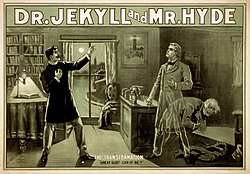
The Strange Case of Dr. Jekyll and Mr Hyde, Robert Louis Stevenson

It's frankly embarrassing that I have never read this novella.

This book suffers from modernity (or is that postmodernity, I can never decide).  That is, I have been so massively exposed to far worse and more terrible, violent, and horrific tales just in getting out of bed of a morning, that the novella just failed to thrill me.  Reading it was more of a chore than a pleasure.  I just didn't feel it.  I think there are scarier things on Nick Jr.  Culturally, we've moved on.  I also think we've embraced our darker sides more openly than in the era this was written, so someone being self obsessed, interested in (presumably) sexuality and experience is not the jaw dropping horror it may have been in yesteryear.  I know, I exaggerate, but still, popular culture has moved on. 

I get that the novella is a lesson in suppressing the self, and the strength of - okay, I can't resist - the Dark Side.  But overall, I prefer the Star Wars "there's always hope for you in the end, even if you're a homicidal Sith Lord and killed a whole bunch o' people and cut of your son's hand and stuff" brand of lesson, than the "I guess it just went bad, whoops, there you go don't go and do bad stuff, peeps," brand of Dr Jekyll.

Is this review frivolous?  Perhaps.  I blame that potion I drank earlier...

I found the lack of insight of Jekyll/Hyde simply frustrating.  This was something he decided to do to himself.  He kept at it out of some moral passivity that was annoying, killed someone, felt bad, tried a bit harder, but ultimately seemed to blame the fact he ran out of some kind of salt for his complete reversion to his 'evil' self.  Some finer moral reflections on these actions might have been nice.  And the message that, if indulged, our "baser" instincts lead straight to some kind of evil takeover is a tad simplistic and naive for my liking.

One to read, though, definitely.  It's important in the very shaping of the stories we now take for granted, and I'm very aware that I'm reading this work from a particular cultural and social position.  For that reason, it gets -

7/10

Another Kindle for iPad e-read, this one was free, there are heaps of free and 99 cent versions of the classics out there!

Wednesday, March 16, 2011

Committed, Elizabeth Gilbert

Elizabeth Gilbert's thoughts and explorations on marriage and committment, which I read very early this year but hadn't reviewed til now.

Committed could be called a pop-sociology book, so in that sense, I liked it, though the sociology was a tad light on, and freely mixed with personal reflections or opinions of her friends (but that's the intellectual snobbery in me, perhaps.  I am a sociologist, after all, so mea culpa!). Gilbert has some interesting insights into marriage, paired with her personal story, so the book is a decent read, if frustrating and somewhat disjointed at times.

Gilbert is fundamentally ambivalent about marriage as an institution, and seems to go to a lot of effort to convince herself otherwise, when, to be honest, she could just have got married (or not) and been done with it.  The ridiculous requirements of the US government can't be helped, if you need to get married, then perhaps you just should. 

So, I found the agonising premise of the book, needing to somehow be reconciled to marriage as a whole in order to get married, puzzling.  To be honest, if I'd come out of an exploration of marriage feeling as Gilbert did about it, I wouldn't have been getting married.  Because let's face it, they only got married because they were forced to by US immigration laws.  The happily ever after feel of the ending of the book (which, of course, ends in marriage!) didn't match the questing tone of the rest of the work. It felt a bit like a cop out.

But, I enjoyed the book overall, though it's not as compelling as Eat, Pray, Love.  For those of us who have called a truce with marriage (I have been married twice, despite a lack of faith in it as an institution, and having some very serious issues with being married when others are not permitted to be) it's a decent read that raised many of the issues I've had with marriage myself. Probably worth a read if these issue mean something in your life, but I'm unlikely to re-read this one.

6.5/10

This was a IRL book! 

Elective Affinities, Johann Wolfgang von Goethe

Embarrassingly, I'd never read any Goethe, so decided to start with Elective Affinities, as it's short and sweet.  Elective Affinities is Goethe's third novel, and also one of three of Goethe's books on the 1001 list.

Elective Affinities is Goethe's attempt to explore human relationships, and marriage in particular, using the laws of chemistry as a...muse?, inspiration?, recipe book?, well, something of that sort.  Published in 1809, it was quite controversial at the time (and since) for what many perceived as immorality and the encouragement of divorce, though apparently many critics (and me!) can't actually decide if Goethe came down in the end on the side of the "sanctity" of marriage, or the pragmatism of divorce - at least, the destiny of true love.

The main characters, Eduard and Charlotte, have married late in life after their first partners have died.  They (for some reason) decide to ask Eduard's friend, the Captain, and Charlotte's neice and ward, Ottilie, to come and live with them, with predictable (apparently, this being the point) results.  Bonds are broken, new bonds are formed, apparently there is nothing to be done (or is there?).  This is, apparently, a double displacement reaction in chemistry.  Sounds thrilling, yes?  Perhaps not.

I'm not sure if Goethe was sure what moral lesson he was going for here, if any, but it seemed to me that the book was a tale of the inevitability of fate, coupled with the efforts of individuals to change it (or not).

 I can't resist quoting the blurb from a critical work on the book:
"From the time of its publication to today, Goethe's famous novel The Elective Affinities (Die Wahlverwandtschaften, 1809), has aroused a storm of critical confusion. Critics in every age have vehemently disagreed about its content (whether it defends the institution of marriage, radically supports its dissolution, or even whether it is about marriage at all), its style (whether it is romantic, realistic, modern, or postmodern) and its tone (whether it is tragic, anti-romantic, or ironic).
"[....]  Readers fiercely debate the role of the chemical theory of elective affinities presented in the novel. Some argue that it suggest a philosophy of nature that is rooted in fate. Others maintain that it is about free choice. Others believe that the chemical theory is merely a structural device that allows the author to foreshadow events in the novel and bears no relevance to the greater issues of the novel."
So, no great suprise that the novel is somewhat confusing and not easy to interpret.  Personally, I felt it was more about the effect of free choice impeding the "natural order" of things, the elective affinity between those who are "meant to be." When the characters refuse to follow the dictates of chemistry, a whole heap of bad stuff happens to them.  So the lesson seems to be: get in line with fate or get out of the way.  Except a tad more poetic and lyrical and stuff.

Okay, I didn't love it.  I found myself actually saying aloud as reading it, "this book is just odd!"  I just couldn't get into it, didn't find it convincing, and didn't get anything much out of it.
I understand that Goethe is telling us something about relationships, now with more chemistry [TM!], but the characters weren't compelling, the relationships seemed one-dimensional and unbelievable.  I didn't love that one of the main love interests was the neice of Charlotte, that Eduard had known as a small child, and was dependent on them, and still at school (!!).  I was [spoiler alert] also just jaw-dropped at the sudden killing off of Charlotte's child!  That, and the utter selfishness of the four main characters just made it an unpalatable read for me.

I have to admit, though, that I've since been interested in reading about interpretations of the book, (probably because I wasn't too certain of my own).  I was also fascinated to read that Max Weber took his concept of Elective Affinites in The Protestant Ethic and the Spirit of Capitalism, from Goethe's book!  I've always had a soft spot for Weber.

So, read it, it's interesting, and you'll find yourself thinking about it afterwards.  But not a fabulous one to just read.

6.5/10

This was an e-read on Kindle for iPad, though make sure you get the Oxford World's Classics edition, this is a good translation by David Constantine (I hate to think what a bad translation would do to this book!).  It was only a few dollars from Amazon, and the only decent translation in e-book form I could see there.

Ref: Goethe's Elective Affinities and the Critics, Astrida Orle Tantillo (2001), see here for a full reference and extracts.