Wednesday, June 15, 2011

World War Z, Max Brooks

World War Z: An Oral History of the Zombie War, is a startlingly clever read, using a series of oral-history interviews with a range of World War Z survivors from around the world to illustrate a whole lot that is wrong with our current society: the attitudes and actions of the conservatives in the West; class and racial divisions; terrorism; environmental degradation; the inherent selfishness of our surburban lives; the weaknesses of capitalism; our attachment to objects and technology; and...but wait there's more [steak knives!].

You can read this book as a macabre adventure tale of the zombie rise and epic human resistance, told in riveting vignettes.  And as a powerful critique of how humanity is facing our current crises and divisions, and how that might work out for us...or not.

There is some classic post-apocalyptic insights into the human soul here, some detailed and fascinating characterisation, as well as sweeping political summary and critique.  The chilling "last stand" at Yonkers (complete with press pandering and the futility of mass armament in the face of terror[ism]) is pretty masterful stuff, as is its counterpoint, the heroic and mechanically awful battle at Hero as America reclaims itself. Another of my favourites was the close telling of one air-woman's story, trapped behind the lines and increasingly desperate; and the tale of a blind warrior in Japan and his faith in the core of his country. 

There are women warriors, child warriors, blind warriors, armies in the "third" world, struggles in China, the novel takes us around the globe, big and small, working through the "history" of WWZ, from the first gory rise of the Zombie virus (cleverly mirroring the supposed development and reaction/lack thereof to HIV) and its spread, to the collapse of civilisation, to the rallying and defence, to the "victory" stages where the threat is largely defeated and humanity is cautiously peeking out from under the covers. 

I really liked this book, in it's simplicities and it's complexities.  I'll be reading it again soon to pick up more of that juicy social and political critique layer.  Be warned before reading: there is some full on zombie slaughter, it's not for the faint of stomach.

9/10

Another read on Kindle for iPad.

Saturday, June 11, 2011

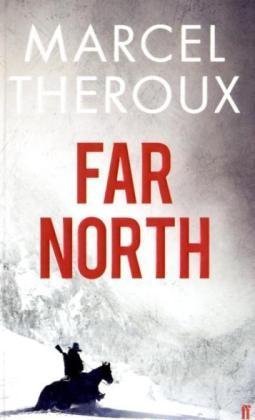
Far North, Marcel Theroux

Far North is another post-apocalyptic novel that focussed on life after *it* happens, *it* in this case is some kind of environmental/economic/social collapse.  Our narrator, Makepeace, is the last "constable" of a dead city in the wastes of Siberia, a city/town that had been settled as an escape from society by (apparently) mostly Westerners. Makepeace is alone, other than random travellers passing through.  The book tells of Makepeace's life and travels, searching for others (or the dream of what others would be like).

I really enjoyed the first part of this book, it was gripping, sensitively told, harsh, but intriguing.  Unfortunately, after this first section, it seemed like a different book.  Makepeace decides to leave the city, and journey in search of others.  The strange things that happen, and the pretty much utter hopelessness of the few humans who remain sat oddly against the basic humanity/goodness of the narrator.  It was as if everyone else became souless, cruel, and capable of anything.  Sure, I'm sure some people would be like this, and telling these stories is part of what makes post-apocalyptic and dystopia literature fascinating.  But, everyone?  The book becomes an unremitting tale of horribleness and tragedy.

And [spoilers] some of it was just unbelievable.  I simply didn't get the whole "prisoner" (really, slaves) camp deal.  The narrator was so matter-of-fact about it, it was almost literally "and then I lived in the prison camp for 5 years."  Oh, okay then.  I also don't believe that a woman could live for five years with the dire scum of humanity as described and not get raped.  Sorry.  Even if she had a knife. 

The whole issue of slavery, including that some people had apparently "volunteered" for slavery was not dealt with sufficiently.  It's a big deal, one that wasn't extended or explored.  Elements of the characters were unbelievable.  One of the slaves was (supposedly) a surgeon before the collapse.  Really?  Why didn't he just tell someone and bargain his way out?  Why were none of those essential skills not regarded as relevant or worthy of trade? I can't imagine a post-collapse society that wouldn't highly value a doctor (!!).  The book was littered with this kind of incongruity.  Like, what happened to everyone?  Why did everyone just disappear?  Didn't the narrator have any friends?  Where did they go?  How did they die? 

The treatment of the indigenous peoples in the novel was also problematic.  It was made clear that the settlers in the narrator's city weren't Russian (the city is in Siberia), or native to the region.  It seemed they mostly came from America.  The local indigenous people, all of whom seem to be living quite alright thanks very much, despite the collapse of "civilisation", are portrayed as drunk, violent, and don't even figure on the narrator's radar, other than a very occasional source of trade.  Even given that poor portrayal, the narrator's lack of interest in them is just odd.  If you were the only person alive in a city, and there was a perfectly functional community near you, wouldn't you be interested in them?  In making ties to them, trading, learning things?  Joining them??

Gender was the other main issue with the book.  Sure, for the first few chapters Theroux is playing with gender and identity, and we're supposed to be suitably surprised when Makepeace turns out to be a woman.  I guess we're supposed to feel that way because women aren't competent at surviving...or something...and the narrator is.  So *gasp* a woman!!  Wow, that's super special because she can hunt and chop wood and live alone and shot someone!  Who would-a thunk it!  I get what the author was going for, but didn't like it.  I'm generally not suprised when women are competent human beings. 

The other main gendered issue was that the novel turned out to be a kind of rape revenge book, and there was just something, some essential quality of experience, that I felt was missing in the book. The twists at the end seemed too contrived and worked out too simply.  The narrator just didn't seem as bothered by the sudden appearance of her rapist as you might expect.  It all sat a little oddly.

Look, I liked some of the book, some of the writing was compelling, and the first part was just great.  I wish it had continued in that vein. It just didn't work for me as a whole.  Some great ideas, but too much not explained or fully realised in the text. Worth a read if you're interested in the genre, otherwise give it a miss.

6/10

This was a Kindle for iPad read.

Thursday, June 9, 2011

The Passage, Justin Cronin

I like The New Dork Review of Books, and just before the rapture was scheduled, read his post on the best of the post-apocalyptic books.  Now, I love me a good end of the world story!  The Stand (Stephen King) is one of my go-to books, and I've read fairly widely in the field over the years.  But not lately, which is why there were several grand suggestions in the NDR list and comments I thought I'd try out.  So I'm blaming him for the reading jag I've been on since. 

The Passage was the first of my post-apocalypse reads, I finished it off in short order on our recent holiday.  I figured it would be a good last read in case of rapture ;)

The Passage is the first in a series (three, I think) of books by Justin Cronin about the fate of humankind after a virus gets loose and kills nearly everyone...by turning them into vampires (not a spoiler, this is made pretty clear in the very first pages of the book).  Don't let the immediate eye-roll of "vampires" put you off.  These are not sparkly, well-dressed debonairs.  Think more 28 Days Later over Twilight.  The Passage is a tale of surviving in the face of a weird virus that meant the end of the world story, not a teen romance. 

The book starts with some of the story of how it all happened, then, kind of disappointingly, skips ahead 100 years to focus on a small settlement eking out a living under lights.  I say disappointing because one of the bits I love in this kind of book is the slow descent into madness of civilisation, and the unravelling of our illusions of behaviour, which I felt was pretty much skipped in this novel. Those are still key themes, of course, isn't that the point of a rollicking post-apocalyptic novel?  Telling us how many of our dearly held beliefs about ourselves and our limits are (or might be) illusions?  But the close telling of the decline was skipped in this one.  *sad face*  Instead, after the initial outbreak, our story skips to a small, fractured community living behind walls and thinking they are the only ones left in all the world (read: America). 

The Passage focusses on the fate of one girl, Amy, infected with a "pure" strain of the virus (also not really a spoiler, her fate and role is foreshadowed very early in the book), and destined to play some central role in the climax of the virus-infected vs normals.  The bulk of the book is a crossing the wilderness story, some of the survivors set out to travel back to where the virus all began, and tells what they encounter on the way.

The swap between the immediate-aftermath novel and the 100-years-later novel was more than a little jarring, despite the journal entry that was meant to transition us gently.  I had become very involved in the central story of Amy and her companion, this was rapidly wound up (too rapidly I think) and replaced with a whole new world and cast to acclimatise to.  It felt like two separate books, and only started to tie back together in the final chapters.  While I enjoyed both parts of the book, it suffered from the lack of a transition phase, and the first part of the book was brought to too quick a finish.  This missing phase could have taken us through more of the collapse of civilisation, some of the efforts of survivors, maybe some vignettes to get us through to the next phase of the action. 

The Passage is well worth a read.  It's a gripping page-turner, a medical emergency and survival story, followed by a journey across the wilderness in the face of overwhelming odds, with a dash of light at the end of the tunnel.  It's bleak, but not hopeless.  If you like a tale about the end of the world as we know it, or enjoy a virus/vampire book, or liked The Stand, or just want a good story that's well written about the darknesses (and lightnesses) of the human soul, pick up a copy!  I'm looking forward to the release of the next installment...

8/10

This was a Kindle for iPad read.

Tuesday, May 24, 2011

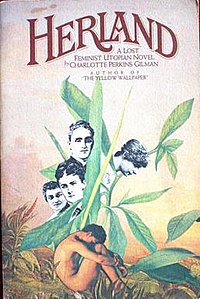
Herland, and With Her in Ourland, Charlotte Perkins Gilman

Charlotte Perkins Gilman, probably best known in a literary sense for her short story, The Yellow Wallpaper, wrote a quite startling two-part novel about a feminist utopia, heavily critiquing society along the way.  While some of her ideas are a product of her time (it's a little bit eugenics, and she's not up with intersectionality in her examination of oppressions), Herland, and the second part, With Her in Ourland, is a riveting read that has much to offer a [post?]modern feminist.  I found this one on the fab Year of Feminist Classics blog, their post on Herland is here.

Herland was published in parts in Gilman's self-edited periodical in 1915.  The book's pretext is the discovery, by three male explorers, of a cut-off and isolated land populated only by women, that has existed for over 2000 years.  Their subsequent behaviour and adaptation (or lack thereof) within this society during their stay allows Gilman to explore this utopia, which in turn is the vehicle for her to provide some stark and powerful critique of her [our] own society.  The story is narrated by one of the explorers, Van Jennings, a sociologist (see, what's not to love!).  Van takes an enlightened road of reluctant acceptance, while the other two men either capitulate totally (which seems to be taken as weakness), or react violently against the female utopia (which is condemned).

The focus of the utopia is a central idea of motherhood, backed up by a community-based semi-tribal social system.  Critique is often levelled at Gilman's idealisation of motherhood in Herland, but if taking motherhood as an organising social force, I pretty much agreed with her.  The birth, education and value of children in our society seems tragically poorly valued to me.  If the concept of "motherhood" here is less about the "inate" desire of every individual woman to have a child [problematic], and more about the role, value, and all round key importance of motherhood [/parenthood] in general as a social institution, then yeah, I'm pretty much there with her.  A society built around the treasuring of the next generation can't help but be better than this one.  Right? 

With Her in Ourland is published as the sequel to Herland, though arguably it is simply the second part of that work.  Published serially in 1916, it tells of the return of two of the explorers to "Ourland" society, accompanied by one of the Herlanders.  This volume moves from utopia to dystopia, and is mostly conversations and observations between Van [explorer sociologist] and Ellador [the Herlander].  They tour the globe, from war-torn Europe, to disaffected America, providing a powerful and insightful commentary on the world of the time. The bulk of the book is focussed on America, as both a hope and a disappoinment.

Herland is the stronger of the two books, with what is more recognisably a narrative.  Ourland becomes pretty much a series of sometimes dry essays in conversational form, and though I thorougly enjoyed them, I freely confess that I am a sociologist by trade and this might have been a telling factor.

Both works have lapsed into obscurity, though Herland was republished in the 1970s, and is more widely available today.  Both books have been critiqued in recent years, largely for Gilman's treatment of other social issues, including race, religion, and the "natives" referred to throughout.  As a product of her time, though, Gilman's take on racism remains liberal. The other main sticking point for me was the complete lack of womens sexuality in the book, the women were asexual.  Bit of a flaw, there [!!].  It was part and parcel of her idealisation of Woman. 

While written in 1915/16, many of Gilman's insights remain uncomforably current.  Here are some interesting quotes:
A neat description of the sociological imagination: "...I didn't care what it was they talked about, so long as it connected with human life, somehow.  There are few things that don't." Herland: 147 of 8636.

"[Herlanders]...were strikingly deficient in what we call "femininity."  This led me very promptly to the conviction that those "feminine charms" we are so fond of are not feminine at all, but mere, reflected masculinity - developed to please us because they had to please us, and in no way essential to the real fulfullment of their great process."  Herland: 1538 of 8636.

It remained true that the Church, any church, in any period, had set its face against the people's learning anything new; and as we commonly know, had promptly punished the most progressive.  With Her in Ourland, location 1368 of 2550.

"Here you are, a democracy - free - the power in the hands of the people.  You let that group of conservatives saddle you with a constitutions which has so interfered with free action that you've forgotten you had it.  In this ridiculous helplessness - like poor old Gulliver - bound by the Lilliputians - you have sat open-eyed, not moving a finger, and allowed individuals - mere private persons - to help themselves to the biggest, richest, best things in the country."  With Her in Ourland, location 1716 of 2550.

On the home/family structure: "What do you want done?" I asked, after a while.
"Definite training in democratic thought, feeling and action, from infancy.  An economic administration of common resources under which the home would cease to be a burden and become an unconscious source of happiness and comfort.  And, of course, the socialization of home industry."  With Her in Ourland, location 1728 of 2550.
Interesting stuff!  I'd recommend both works as powerful critiques of the society of the time (and, let's face it, most of this stuff remains awfully current), and as important works in the feminist canon.  Herland in particular is the more accessible work, and available free in various formats.  Pick up a copy!

8/10


Herland is available at Project Gutenberg.  It was a Kindle for iPad read.

With Her in Ourland is available in a special edition, which was relatively pricey on Amazon (but I'd already commited to read it, so had to pay up!).  It was a Kindle read for iPad.

Saturday, May 21, 2011

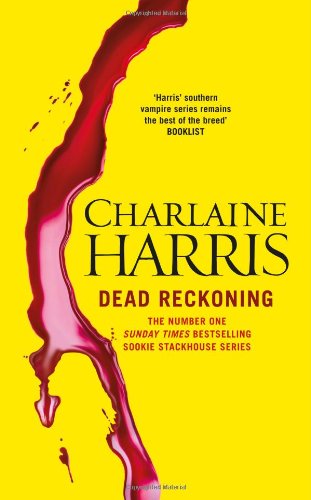
Dead Reckoning, Charlaine Harris

I've enjoyed the quick-reading frolics of the True Blood books (and am a big fan of the TV Series), and always read along when a new one comes out.  It feel nicely into my "let's not strain my brain" books which is all I've managed lately. Sure, Dead Reckoning furthers the series' story (kind of) and there's the usual sassy Sookie (though now, apparently, with less sass), complete with supernatural adventures, and sexy vamps.   But this installment falls very flat.

Plotwise, well, if you haven't read the series yet, you're probably not interested.  If you're a fan of the series, there are no big reveals here, things are plodding by as usual (though Bill and Eric seem to have swapped personalities).  So, I'm just gunna whinge in a spoiler-y way: The whole Pam sub-plot was just odd, completely out of the blue, and seemed to go nowhere and serve no purpose.  There was yet another evil boss vampire to vanquish.  There was a WTF moment with Alcide.  The faerie stuff was all over the place, and didn't mesh with the rest of the plot. Why was Hunter in this at all?  WTF was going on with the whole de-bonding thing?  The whole book was jumpy and lacked cohesion, and there were more unnecessary subplots than I can list (yes, there were more than those above). 

This book feels like Harris is just phoning it in.  Dead Reckoning was wooden, predictable, more than a tad confused, and not at all original.  Even Sookie was not on her game, I like her more tough and sassy and less Christian moralistic and weepy.  The True Blood series has been a nice addition to the vampire/supe canon, but this installment was lacklustre.  Sure, we've all still gotta read it, and I may as well confess I'll still read the next one, too, when it comes out, but it wasn't as fresh as the rest of them (mostly) are.

Verdict: more than a tad stale.  Only read it if you've got this far in the books already (and we all know you just have to keep going, no matter what).

Oh, I read this great review on Goodreads while looking for a picture of the cover, and can't resist a link.

5/10

This was a Kindle for iPad read.

Sunday, May 15, 2011

What do you read when you're not reading a book?

Blogs, of course!  It's trite but true to say that sometimes that ubiquitous "stuff" gets in the way of blogging, and reading.  I've read a grand total of two and a half books in the past month, and all of those were only 200 pages or so.  By which I mean I've read hardly anything.  Life had other plans.

But, I can still be spotted gadding about reading stuff on the iPad, so what on earth has distracted me during those dull quiet parenting moments?  

Why, blogs, of course! I sometimes worry at the number of blogs I'm subscribed to/following, it's nearing 400 *gasp*!  Here are a few gems from my feedreader:

I always get an interesting evening's clicking out of the link round ups at Kittling Books.

I love the poetry and life at a moon worn as if it were a shell; the thoughtful and insightful perspectives on children, development, and play at Teacher Tom, and the awesome sociological insights at Sociological Images.

I'm enjoying reading along with A Literary Odyssey, The Trick is to Keep Reading, and the New Dork Review of Books.

As for life, I want more of this:

MORE
And less of this:
LESS!!

Sunday, May 1, 2011

On book blogging slackness...

Hmmm....Could this be a reason?


We moved all the books into the new library space.  It's going to be a family room/library area (yay!) but currently looks like this.  You can see my TBR pile if you embiggen the picture, it's in the green clothes basket on the far left.  :D

Though I have no excuses for not posting anymore, as we finally put out study together again (slightly untidy still, here, but you get the idea).  Far side is me, near side is teenager.


Interesting times!  I'm planning on rehoming a LOT of books, most that I now have in digital format, and lots we just won't read again.  It'll be hard, I used to have 14 bookcases of books, with several more boxes in storage, and we now have 6 bookcases out (and some will go to storage, young adult and kids for when Lolly wants them, some of my professional library).  That's a LOT of culling to be done.  Wish me luck!